
Blog
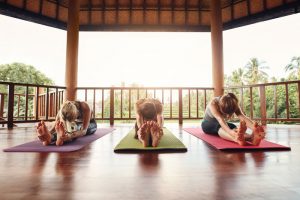
what makes you not-a-yogi
Some years back, during my journey to India, I came across this intriguing book "What makes you not a Buddhist" written by an even more intriguing Buddhist monk Dzongsar Khyentse Rinpoche.
That time I was living in McLeod Ganj (where the Tibetan Government in exile is located) intensely immersed in Tibetan Buddhism studies, and was eager to find out what classifies someone to be not-a-Buddhist.
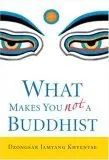
The book turned out to be a light an easy read, devoid of over-elaborated academic jargon. It was exactly, what a young, lost among spiritual materialism gibberish, Buddhist needed. Khyentse Rinpoche in a skilful way deals with spirituality-related misconceptions, and a presupposed image of a Buddhist.
The message of the book resonates with an old saying that "you can't judge a book by its cover" (or "a monk by his robe"). The only way to be a Buddhist is by practice, and most importantly by meditation on impermanence and emptiness (understanding that nothing is independently existing, but things can exist only in some relation). That's shortly about Buddhist philosophy. If you want to dive deeper into it, I recommend you check out the above mentioned book.
When it comes to yoga, the things are pretty much the same. Spiritual materialism, aggressive marketing, inflated ego, circles of influence, certified courses... and an image to fit in. An image that should correspond to standards of "conscious person" created by yoga journals.
Practice and self-discipline are often undervalued. And it's the practice that truly is the "flesh and bones" of yoga, and all the rest just makes us not-a-yogi.
From this month on, I've been participating in an online Yoga Sutra workshop conducted by dr Kaustubha Dasikachar (Krishnamacharya's (regarded by many as a father of modern yoga) grandson). Yesterday's lecture was particularly on the importance of practice in yoga. We can't learn it from the experience of other people - even from the brightest ones, or from some books. Teachers and books are just like a finger that shows the way (this is often repeated in the way of Zen). Things learned from the experienced (meaning they have been practicing and experienced things they teach) teachers need to be regularly and diligently practiced. Learning from trusted source is imported to avoid the confusion about the meaning of yoga.

Before we learn what yoga is, it's worth giving a thought to find out what it is not. Definitely it is not just a physical practice, for young and flexible women. Our body may transform because of the practice (which happens often), and that is mentioned in the traditional texts in context of cleansing the body. Definitely we don't need to be flexible to start practicing. I feel this misunderstanding is because we don't get it clearly that yoga is manly about concentration. An average person can focus on one thing for some 30 seconds or a bit more, so physical and breathing practices are often necessary at the beginning. We start with the body, because it's the easiest. Slowly we introduce the breath. With regularity, after some time our concentration get better and better, and we can also accomplish more complicated poses. It happens gradually, not forcefully.
Definitely we can take some shortcuts, and get some results with regular practice, and doing some extras, but I recon from a yoga point of view it's rather useless, and if we think of health it could be even dangerous.
To sum up: it's best to keep a regular practice, and learn from our own experience. And what makes us not-a-yogis is lack of practice.
 EN
EN  PL
PL